LULA Pottery is Carisa Miller and a flock of chickens in a backyard garden pottery studio in Portland, Oregon U.S. since November 2018.
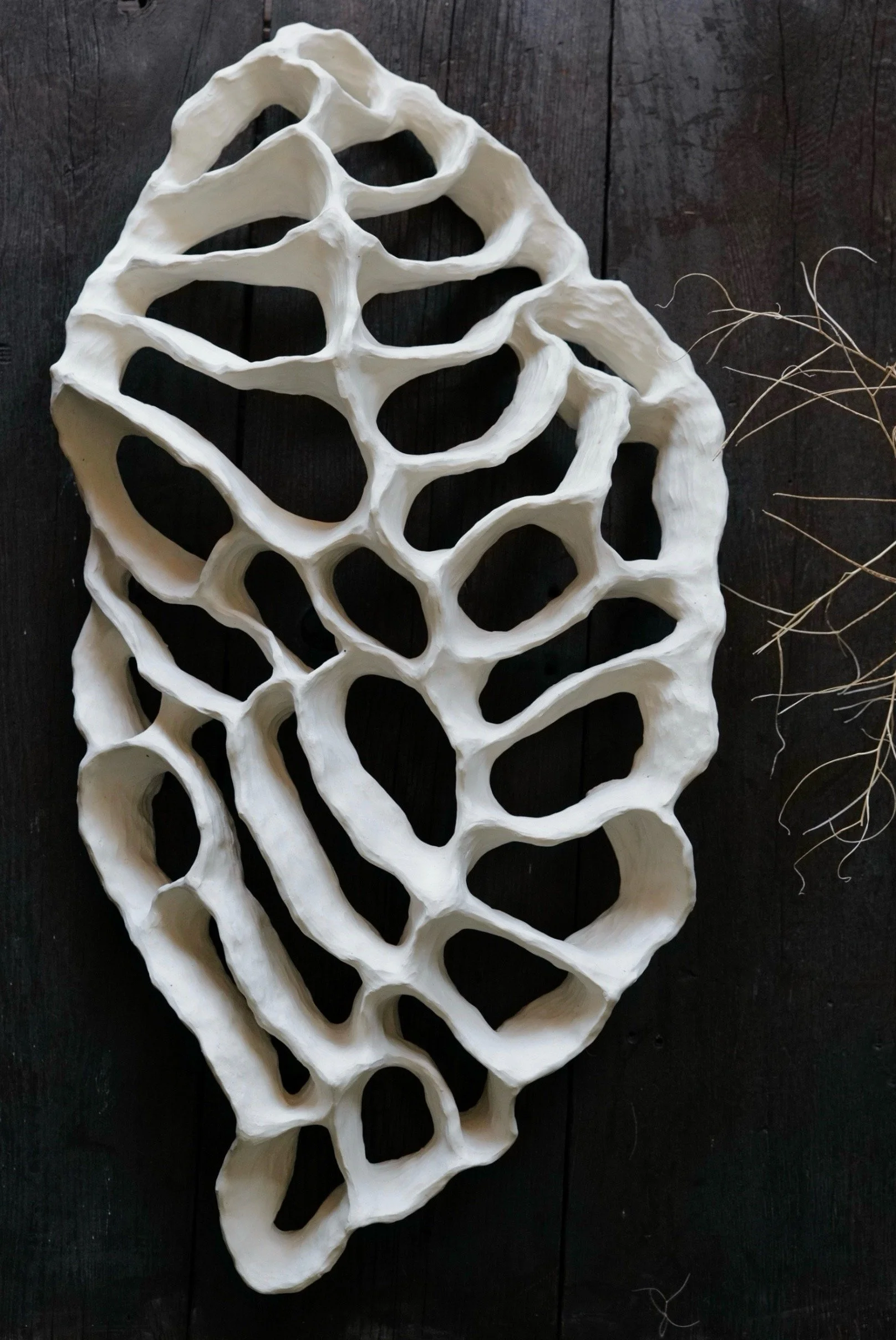
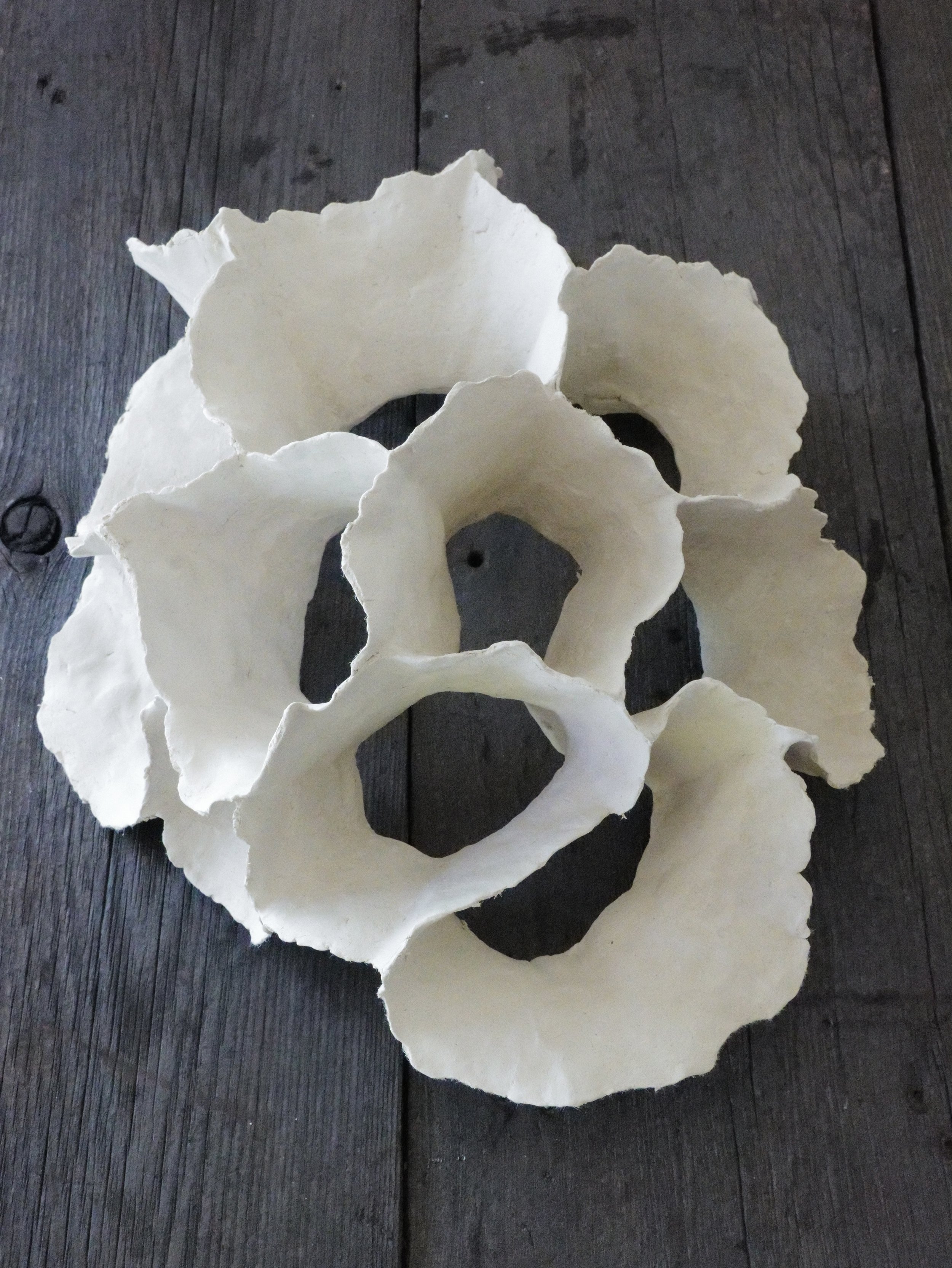
Existing between living and lithic forms, my ceramic sculptures exemplify the generative forces that shape biological and geological forms.
Emerging from shared patterns of growth, accumulation, erosion, and decay, they evoke bone, coral, mycelial networks, and weathered terrain without settling into any singular reference.
My work blurs the distinction between organism and mineral, revealing commonalities across diverse material expressions.
PROCESS
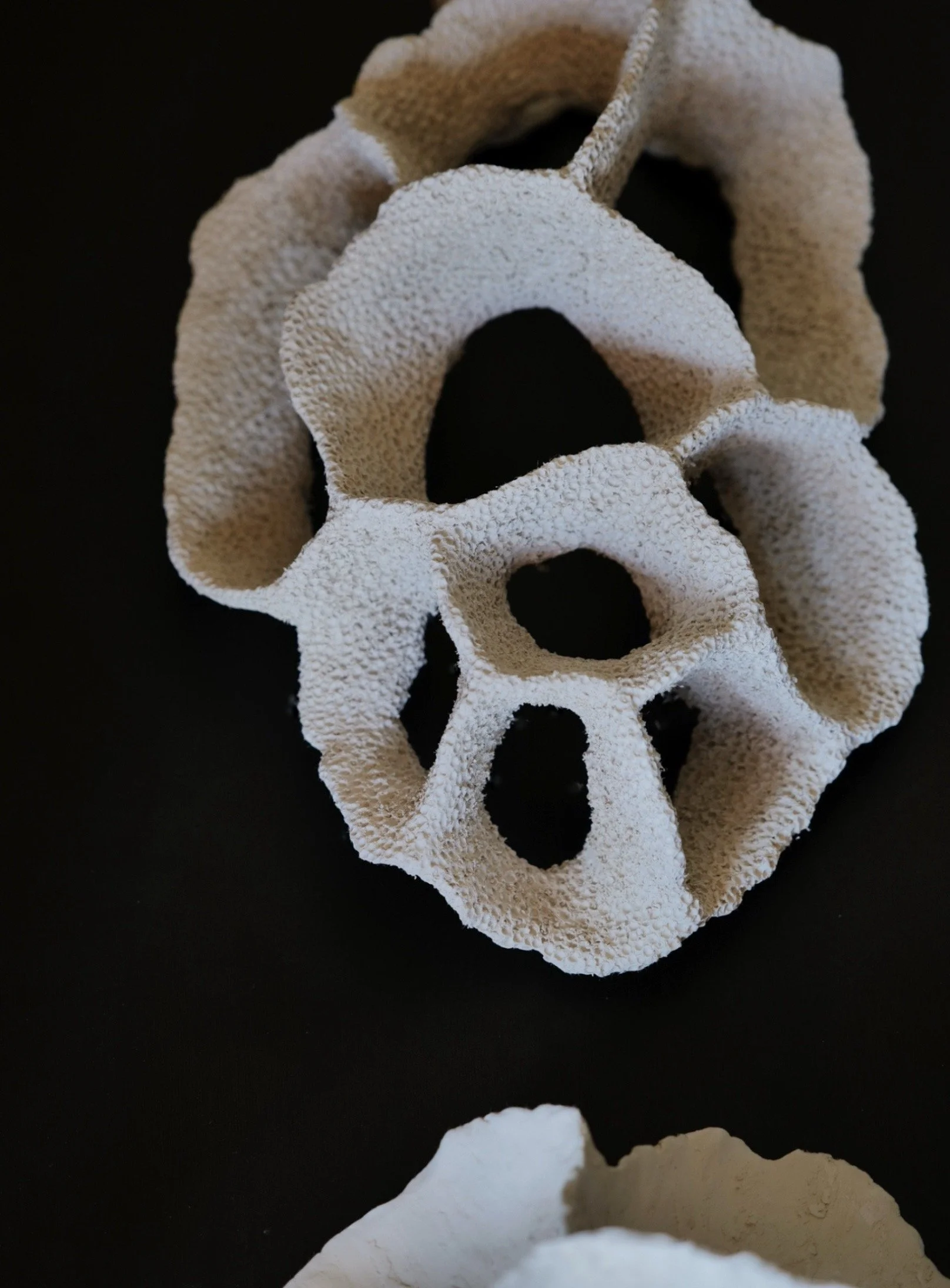
I blend a porcelain and stoneware clay body with small amounts of paper pulp in a small mill in my studio. The cellulose fiber offers a particular range of workability, textural quality, and stronger dry strength prior to firing, and results in a lighter finished weight which is a consideration for wall hung pieces.
Wall mounted work is sculpted by hand from an original single clay slab, free standing pieces usually start on the pottery wheel, and undergo some amount of altering and hand carving.
Pieces are finished either in an electric kiln at temperatures over 2000 degrees or an open fire pit. These “smoke fired” pieces are wrapped in organic material gathered from the garden and chicken yard—including dried botanicals, wood shavings, errant grains, and feathers. The markings on these pots come from the carbon trapping of the combustible materials, leaving shadows and silhouettes embedded in the clay.
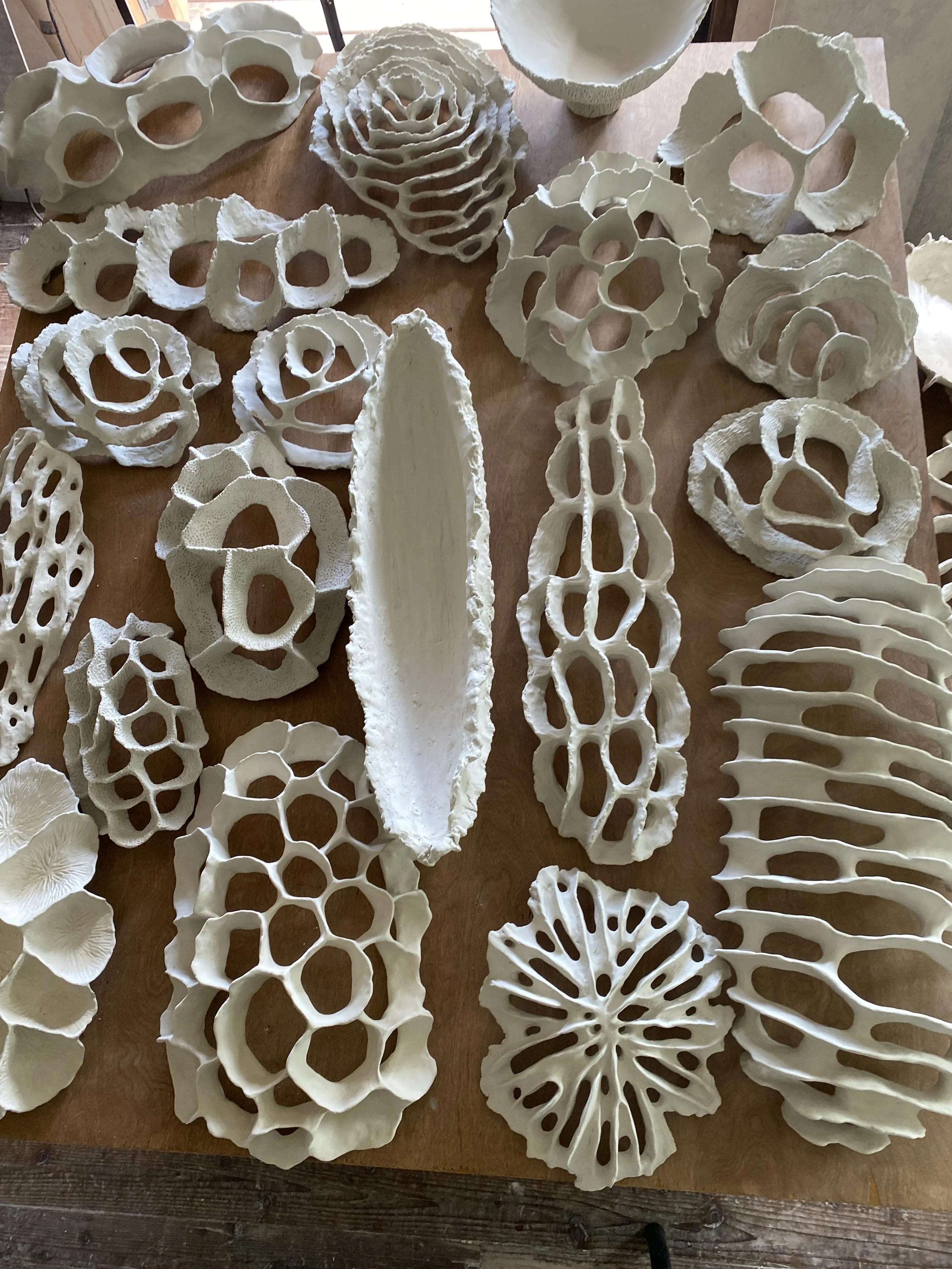
Current Body of work
encompassing theme:
INTEGRAL /necessary to the whole
To be integral is to exist in relation, to be essential to a system. These works trace the shared cycles of matter through emergence, formation, decay, and renewal.
contents:
LOCUS /emergence
Where does form begin? What happens at a point of origin?
Considers inception and sites of emergence: forms that gather around points of origin where growth begins and structure takes hold.
SCAFFOLD/persistence
What structures allow a form to develop, adapt, and endure?
Examines the frameworks that support development—bone-like architectures that persist through growth, adaptation, and decay.
PLEXUS/connection
How does form propagate through networks and relationships?
Follows connective growth through interwoven systems—branching and expanding across root, vascular, neural, mycelial, and fluvial networks.
LITHIC/memory
How does matter record time through accumulation, pressure, erosion, and transformation?
Reflects the evidence of time and the memory held within material: stone-like surfaces shaped by accumulation and worn by erosion.